 XP TRACKER
How to gamify tasks on your to-do list
Rewrite each task as a quest with a clear finish line, give it XP by difficulty, and add up your XP into levels. The big scary task becomes the boss you chip away at. You can run all of it on one sheet of paper.
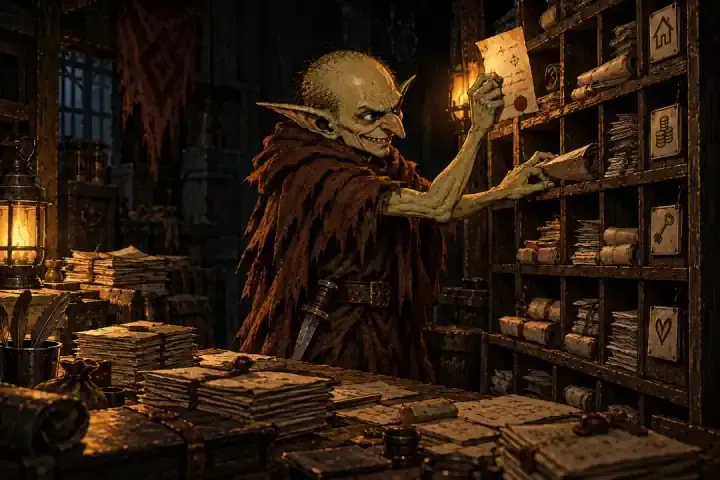
Short answer: rewrite each task as a quest with a verb and a finish line, score it 10, 30 or 50 XP by difficulty, and total your XP into levels. Make your biggest task a boss with hit points you knock down one step at a time. Paper works; an app adds timers and visuals.
A plain to-do list gives you no feedback. You tick a box, the box sits there, and the list gets longer. Games keep players going with small, frequent signs of progress: a number goes up, a bar fills, a level arrives. You can borrow those signals for real tasks with almost no setup.
The method below works for life admin, errands, study tasks and side projects. If your tasks are mostly for a job, read how to gamify work as well. If you want ready-made quests to start from, try the daily quest generator.
The method in six steps
- Rewrite tasks as questsA quest has a verb and a clear end. "Car" becomes "Book the car service online". "Bank" becomes "Cancel the unused subscription". If you can't tell when it's done, it's not a quest yet.
- Score by difficultyUse three tiers: easy (10 XP, under 15 minutes), medium (30 XP, under an hour or a bit unpleasant), hard (50 XP, long or dreaded). Don't agonise over scores. Rough is fine.
- Add a level barDraw a bar at the top of the page with 10 boxes. Each box is 30 XP. Fill a box as you go. When the bar is full, you level up and start a new bar.
- Turn the big task into a bossPick the one task you've avoided the longest. Give it hit points, say 200, and split it into steps worth 20 to 50 damage each. "Move house" might start with "list every room" for 20 damage.
- Add a daily comboFinish three quests before noon and earn a 20 XP bonus. A small combo makes the morning count and stops the hard tasks from drifting to the evening.
- Plan the lootWrite two or three rewards on the page: one for each level-up, one for beating the boss. Keep them small and fun, like a film, a new book, an afternoon off.
Example: one week of life admin
Here's what a gamified list looks like for someone with a pile of errands and one big task, sorting out a move.
| Quest | Tier | XP |
|---|---|---|
| Reply to the landlord about the inspection date | Easy | 10 |
| Book the dentist check-up | Easy | 10 |
| Return the parcel at the post office | Medium | 30 |
| Compare three electricity plans and switch | Medium | 30 |
| File last month's receipts | Medium | 30 |
| Boss step: get quotes from two moving firms | Hard | 50 damage |
| Boss step: pack the bookshelf and kitchen drawers | Hard | 50 damage |
That week is worth 110 XP from errands plus 100 damage on a 200 HP moving boss. With a level every 300 XP, you won't level up every week, and that's good. Levels that come too fast stop meaning anything.
Notice what the list leaves out. "Check email" and "tidy the desk" earn no XP here, because they'd pad the score without moving anything. If a tiny task keeps getting skipped, give it 10 XP for a week, then take it off once it's routine. Keep the list to things that matter to you this week, and move the rest to a separate "someday" page.
Paper or app?
Paper is the fastest way to test the game, and you can see the whole week at a glance. A notes app or spreadsheet works if you want totals added up for you. A dedicated app makes sense once you know the game helps and you want timers, reminders and art to look at. Pick whichever you'll open every day.
Pick mechanics that fit you
You don't need every game piece. Choose the one or two that match what you enjoy in games:
- You like seeing numbers grow: XP and levels. Keep a running total and a lifetime total that never goes down.
- You like a challenge: bosses and timers. Race a 25-minute timer on one hard quest and see how far you get.
- You like surprises: a loot roll. After each hard quest, roll a die; on a 6 you get a small treat from your reward list.
- You like story: name your week a "chapter" and give the boss a name. "The Paperwork Golem" is easier to face than "admin".
If you're curious how XP and levels can be balanced so they stay fair, the points system guide goes through the numbers.
Common mistakes
- Points for everything. If brushing your teeth earns the same XP as filing taxes, the game rewards easy padding. Keep tiny tasks off the list or worth very little.
- Vague quests. "Work on the website" never finishes, so it never pays out. Give every quest an end you can see.
- Levelling up every day. Fast levels feel great for a week and then feel like nothing. One level every week or two keeps them special.
- Building a big system before testing a small one. Run the paper version for one week. Keep what you used and drop what you didn't.
- Punishing yourself with negative points. Losing XP for a skipped task turns the game into a source of guilt. A skipped quest earns nothing, and that's enough.
What the research says
The evidence for gamification is encouraging but mixed. A review by Hamari, Koivisto and Sarsa (2014) found mostly positive results across the studies they looked at, with big differences depending on the setting and the people involved. Research on rewards (Deci, 1971; Lepper, Greene and Nisbett, 1973) also suggests that expected rewards can lower interest in activities people already enjoy. For to-do tasks that nobody enjoys, that risk is small. For hobbies you love, keep the points light.
What to do today
- Rewrite your listTurn your top ten tasks into quests with a verb and a finish line.
- Score them10, 30 or 50 XP. Draw a bar of ten boxes for your first level.
- Name the bossPick the task you've avoided the longest and split it into steps.
- Do two easy quests nowStart the bar moving before lunch.
XP Tracker runs this kind of game for your habits and daily tasks: core quests earn 170 to 300 XP, add-ons 70, 150 or 250, and every quest you finish also damages the current boss. The One life-admin task add-on is made for the errands you keep putting off. See how XP and bosses work.
Questions people ask
What is the simplest way to gamify a to-do list?
Give every task 1, 3 or 5 points for easy, medium and hard, and write your running total at the top of the page. Set a level every 50 points. That's a complete game you can start in five minutes.
How do I gamify tasks I keep putting off?
Make the first step its own quest with its own points. "Open the tax form and fill in page one" gets done more often than "do taxes". Give avoided tasks a small bonus, so the game pays you more for the ones you dodge.
Should I give myself rewards for finishing tasks?
Small, planned rewards help some people, especially at a level-up. Pick them in advance and keep them modest. If the reward becomes the only reason you do a task you used to enjoy, cut it back.
Can I gamify tasks without an app?
Yes. A notebook page with your quests, their points and a running total works fine. Apps help with timers, reminders and visuals, but the game itself is just rules you set.
What's the difference between gamifying tasks and habits?
Tasks end: once the report is sent, it's gone. Habits repeat. For tasks, points and a boss for the big project work well. For habits, streaks and daily quests that come back each day fit better.
Related pages



Start your journey
Pick a class, do the day's quests, and watch your hero level up with you.
Start free on iPhone and Android.
Scan to install Point your phone camera at the code. iPhone opens the App Store, Android opens Google Play.